
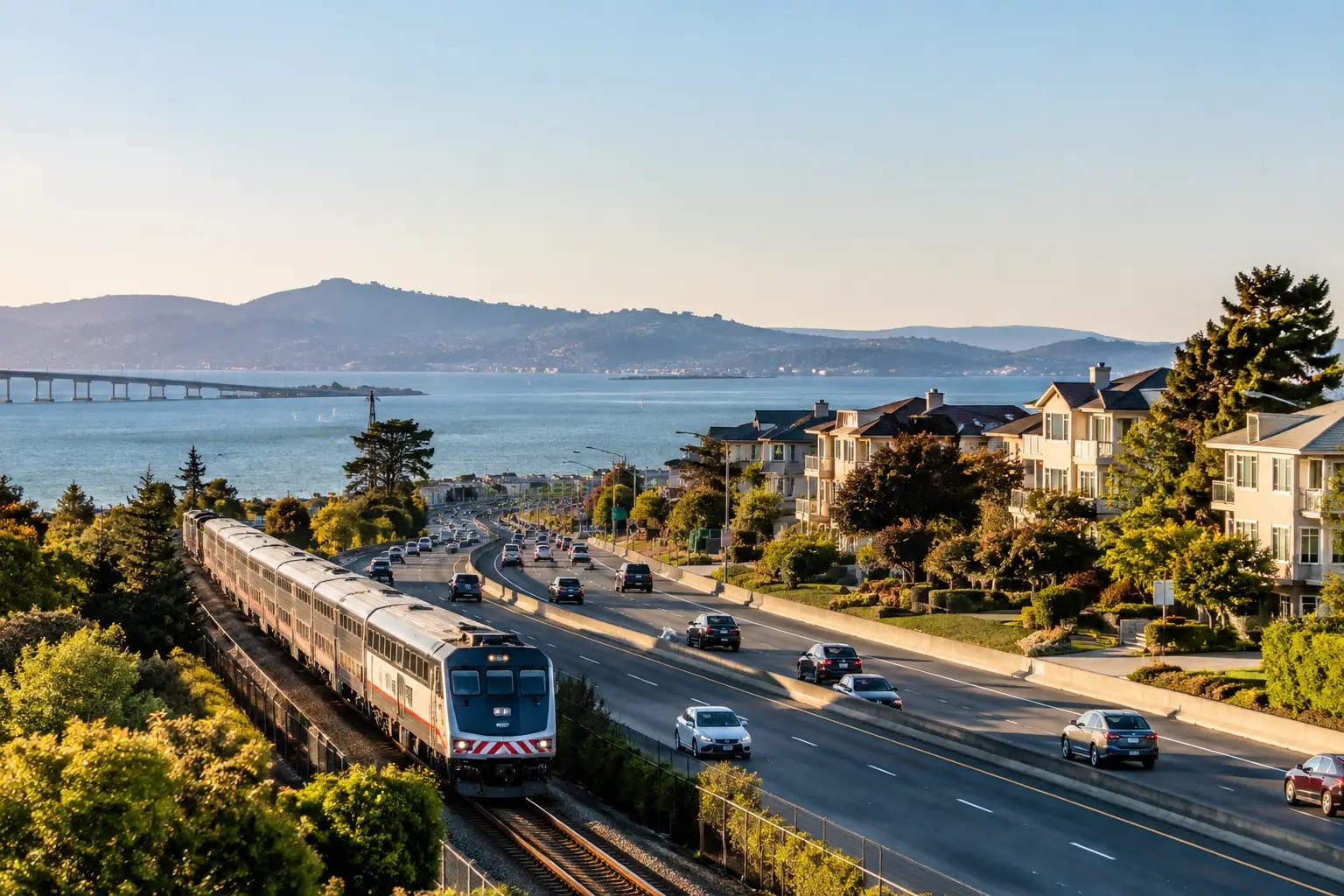

A San Mateo address can make a demanding Bay Area commute materially more manageable - but the right neighborhood depends on where the workday actually begins. The best San Mateo commute neighborhoods are not simply the ones closest to a freeway on-ramp or a Caltrain station. They are the places where transportation access, home type, school priorities, daily errands, and long-term resale appeal work together.
For buyers splitting time between San Francisco, Silicon Valley, and Peninsula offices, San Mateo offers unusual flexibility. It sits along the Caltrain corridor, has direct access to Highway 101 and State Route 92, and remains close enough to Interstate 280 to broaden options for west-side and South Bay travel. The practical question is how much weight to give a fast morning departure versus the life you want after you return home.
Start With the Commute You Will Actually Keep
Before comparing neighborhoods, identify the commute pattern that is most likely to last. A buyer who goes to an office in San Francisco three days a week has a different decision than an executive driving to Palo Alto, a frequent flyer needing quick airport access, or a hybrid worker who makes occasional trips in both directions.
Caltrain access can be especially valuable for San Francisco and South Bay commuters, particularly when schedules and office locations align with the stations. Highway 101 is the natural route for much of the Peninsula and Silicon Valley, while State Route 92 matters for those crossing toward the East Bay. Interstate 280 may be preferable for certain west-side destinations, though it is farther from many central and east San Mateo neighborhoods.
Traffic conditions, train schedules, employer shuttles, and remote-work policies change. A strong home search should account for the primary commute, but also test the backup plan. That may mean walking to Caltrain when driving conditions deteriorate, or choosing a location that keeps both Highway 101 and the 92 corridor within reasonable reach.
Downtown and Central San Mateo: Best for Caltrain and Walkability
Downtown San Mateo and the surrounding central neighborhoods are often the strongest fit for buyers who value a train-based commute and a genuinely walkable daily routine. The San Mateo Caltrain station is near restaurants, coffee shops, fitness studios, services, and active retail streets, allowing some residents to handle much of life without getting in the car.
For professionals commuting to San Francisco or south toward Palo Alto and beyond, proximity to the station can turn a complicated drive into a more predictable trip. It can also improve flexibility for couples with different office destinations. One person may commute by train while another uses Highway 101 or 92.
The trade-off is straightforward: downtown convenience brings more activity, tighter parking in some areas, and a denser residential setting than buyers will find in San Mateo's western neighborhoods. Housing also varies considerably, from condominiums and townhomes to established single-family homes on nearby residential streets. Buyers should distinguish between being close enough to walk comfortably to the station and being close enough to hear downtown activity or rail traffic.
Central San Mateo suits purchasers who see lifestyle as part of commute strategy. A short walk for dinner, groceries, or a weekday errand can offset a smaller yard or a more compact home footprint.
Bay Meadows: Best for a Modern Transit-Oriented Routine
Bay Meadows has become a compelling option for buyers seeking newer construction, planned neighborhood amenities, and convenient access to the Hillsdale Caltrain station. Its housing mix includes townhomes, condominiums, and detached homes, offering alternatives for buyers who want contemporary layouts and lower-maintenance ownership without leaving San Mateo.
Its location is practical for commuters traveling north or south on Caltrain, while Highway 101 is readily accessible for drivers. The neighborhood's parks, retail, restaurants, and organized streetscape create an easy day-to-day rhythm, particularly for households balancing demanding careers with young children or limited free time.
That convenience comes with a different feel from older San Mateo neighborhoods. Lots may be smaller, homes can be closer together, and the area has a more recently developed, master-planned character. Buyers looking for mature tree canopy, expansive yards, or classic architectural detail may prefer Baywood, Aragon, or San Mateo Park. Those who prioritize efficiency, newer systems, and proximity to transit may find Bay Meadows particularly well aligned with their goals.
Hayward Park: Best for Central Access With Neighborhood Character
Hayward Park offers a useful middle ground: it is close to downtown amenities and the Hayward Park Caltrain station, yet it retains the residential streets and established-home character many buyers want. The neighborhood's appeal lies in its centrality. Residents can access downtown San Mateo, the Hillsdale area, and major road connections without committing to a fully urban setting.
For a commuter headed to San Francisco, the nearby station can be an important advantage. For drivers, access to Highway 101 is generally convenient, and the location is practical for reaching other Peninsula communities. It is also a sensible area for households whose commute may evolve over time, since the neighborhood does not tie them exclusively to one transportation mode.
Homes here can vary by block, condition, and proximity to train tracks or larger thoroughfares. That is where careful property-level analysis matters. A house that looks ideally located on a map may feel different during peak rail periods, school drop-off hours, or a weekday evening. Buyers should visit at the times that reflect their real routine, not just during a quiet weekend showing.
West San Mateo: Best for Space, Schools, and 280 Access
Baywood, Aragon, San Mateo Park, and nearby west San Mateo neighborhoods are often chosen for their residential setting, larger lots in certain pockets, established architecture, and access to highly regarded schools. For move-up buyers and families, these areas can offer the sense of permanence that is harder to find closer to the rail corridor.
The commute trade-off is that Caltrain is usually less walkable, and Highway 101 may require a longer drive than it would from downtown or Bay Meadows. In exchange, Interstate 280 and State Route 92 can be more convenient, depending on the exact address and destination. This can work well for commuters traveling toward the west side of the Peninsula, parts of Silicon Valley, or across the bridge corridor.
For many buyers, the calculation is worthwhile. A 10- to 15-minute difference in a weekday departure can be acceptable when the home provides more usable space, a quieter street, and a location that supports the household's next stage. It depends on whether transit access is a core requirement or merely a welcome option.
These neighborhoods also tend to have enduring appeal among buyers seeking traditional homes in a polished residential environment. That demand can support long-term resale, though every property still needs to be assessed for condition, lot utility, school assignment, and market positioning.
Fiesta Gardens and the 92 Corridor: Best for East Bay and Highway Flexibility
Fiesta Gardens and adjacent areas near the Highway 92 corridor can be especially practical for buyers whose work or family obligations take them toward the East Bay. Access to State Route 92 is a meaningful advantage when the bridge is part of the weekly routine, and Highway 101 remains close for north-south travel.
This area can provide a more approachable entry point into San Mateo for buyers who want a detached home, neighborhood parks, and central Peninsula access. It is less transit-oriented than downtown, Hayward Park, or Bay Meadows, so it is usually best suited to households that expect to drive most days.
The key trade-off is commute variability. Bridge traffic can be highly dependent on time of day and broader regional conditions. Buyers considering this location should drive the route during their anticipated commute window, including the return trip. A neighborhood that is ideal for a hybrid schedule may feel less appealing for a five-day cross-bay commute.
How to Choose Among San Mateo's Best Commute Neighborhoods
The most effective approach is to evaluate each neighborhood against the life you are building, rather than treating commute time as an isolated number. A couple with one San Francisco commuter and one remote worker may place a premium on downtown walkability. A family with a South Bay office, school priorities, and frequent weekend travel may be better served in west San Mateo. A buyer who drives to the East Bay may find the 92 corridor more valuable than station proximity.
It is also wise to account for the hidden parts of a commute: getting children ready, finding parking near a station, walking from a train stop to the office, and the difference between a typical Tuesday and a rainy winter evening. These details have more influence on satisfaction than an estimated travel time alone.
A well-chosen San Mateo home should not force you to optimize only for the present job. It should give you credible options if your office changes, your schedule shifts, or your household needs more from its neighborhood. The right address makes the commute easier, but it should also make the rest of your life feel better supported.