
A bathroom upgrade can make daily routines smoother while helping a Millbrae home present more confidently when it is time to sell. The strongest projects are rarely the flashiest: they combine durable materials, practical storage, reliable lighting, and a finish level that feels appropriate for the home. This guide helps homeowners prioritize improvements with both present-day comfort and future resale in mind.
Start With the Work That Makes a Bathroom Feel Effortless
A bathroom renovation does not need to mean moving every wall or chasing every trend. In many Millbrae homes, the most successful updates begin with the parts people use every day: a shower that functions well, a vanity with useful storage, lighting that works at different times of day, and surfaces that are straightforward to maintain. These details influence how the room feels long after the novelty of a new finish has faded.
Function should guide the budget. Before selecting tile or paint, consider the existing plumbing, ventilation, water pressure, electrical capacity, and layout. Replacing worn shutoff valves, correcting slow drains, updating an aging exhaust fan, or adding properly placed outlets may not create the biggest visual reveal, but these improvements reduce future maintenance concerns. They also support a smoother inspection process if the home is later listed for sale.
Layout decisions matter most in compact bathrooms. A floating vanity can create visible floor area, while drawers generally make better use of a vanity base than a pair of deep cabinet doors. In a larger room, a double-sink arrangement can be useful when it does not crowd the circulation path or reduce counter space. The objective is not to maximize features at any cost; it is to make the room easy to move through, clean, and use.
A well-placed vanity drawer, bright task lighting, and a quiet ventilation fan can improve daily use more than an oversized statement fixture or a difficult-to-clean specialty finish.
For homes with only one full bathroom, thoughtful project planning is especially valuable. Confirm the construction schedule, lead times for tile and fixtures, and the availability of a temporary alternative before demolition begins. A contractor’s allowance can also look different from the final price once tile quantities, plumbing changes, and finish selections are confirmed, so leave room in the budget for the practical items discovered behind the walls.
Choose Materials That Look Current Without Feeling Overly Specific
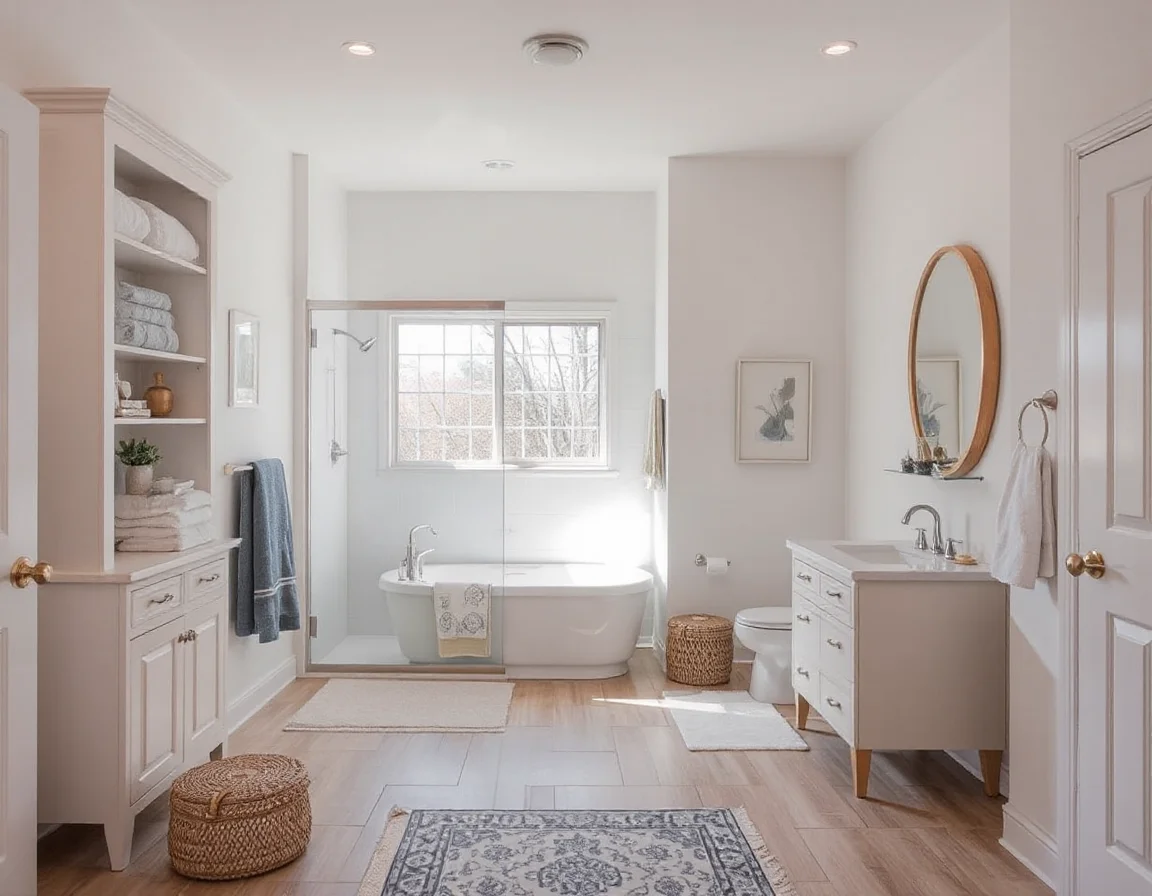
Resale-conscious design does not require a bland room. It simply favors choices that can work with a range of furnishing styles and that will age gracefully. Warm whites, soft greiges, muted stone tones, natural wood accents, and balanced metal finishes give a bathroom a polished appearance without relying on a short-lived color moment. Texture can add personality through tile shape, a lightly veined counter, or a framed mirror rather than through a highly specialized palette.
Porcelain tile remains a practical option for floors and shower walls because it is durable, water-resistant, and available in many stone- and concrete-inspired looks. Larger-format wall tile can create a calmer visual field and reduce the number of grout lines to maintain. On floors, select a finish with traction appropriate for a wet environment and use grout colors that will not show every day-to-day mark.
Natural stone can be beautiful, but it comes with care requirements that should be understood before purchase. Some surfaces need periodic sealing and can be more sensitive to acidic cleaners or cosmetics. Quartz counters, porcelain slabs, and quality solid-surface materials may offer a similarly refined appearance with a lower-maintenance routine. The right answer depends on the household’s preferences, the bathroom’s level of use, and the overall finish level of the property.
Fixtures deserve the same level of thought. A reputable faucet, shower valve, toilet, and ventilation fan are often better investments than a room full of decorative upgrades from multiple sources. Keeping finishes coordinated helps the room feel intentional, though every component does not need to match perfectly. For example, a brushed nickel faucet, towel bar, and shower trim can pair comfortably with a dark-framed mirror or a simple wood vanity.
Use Light, Storage, and Ventilation as Design Features
Bathrooms are often evaluated quickly, yet the experience of the room is shaped by layers of small details. Lighting is one of the clearest examples. Overhead illumination helps with general visibility, while sconces or vertical fixtures beside the mirror reduce shadows at the face. A dimmable option can make early mornings and evenings more comfortable, and a separate shower light can improve both usability and visual clarity.
Storage is another area where a renovation can pay off in daily convenience. Recessed medicine cabinets, vanity drawers with organizers, a linen cabinet, open shelving for folded towels, or a small shower niche can each create a place for necessities without adding visual clutter. When planning a niche, consider the actual bottles and accessories likely to be stored there. A niche that is too shallow or poorly located can become more decorative than useful.
Ventilation deserves attention in Millbrae’s varied coastal-influenced climate. A properly sized and ducted fan helps manage moisture, protects painted surfaces, and supports the longevity of cabinetry and grout. Look for a quiet model so it is more likely to be used consistently, and make sure the installation plan directs moisture appropriately rather than simply recirculating it within the home.
Accessibility-minded choices can also make a bathroom more adaptable over time without changing its visual character. A curbless shower, blocking behind walls for potential future grab bars, lever-style handles, wider clearances where feasible, and easy-to-reach storage are practical considerations. These features can be incorporated with clean, contemporary materials and should be discussed early, before plumbing and framing decisions are finalized.
Match the Scope to the Home and the Local Market
A bathroom project should feel consistent with the rest of the property. In a carefully maintained Millbrae home with original character, preserving a proportionate scale and selecting finishes that complement the architecture can be more compelling than forcing a dramatic style shift. In a recently updated property, the bathroom should connect visually with nearby rooms through undertones, hardware, flooring transitions, or trim details.
It is also wise to distinguish between renovation for personal enjoyment and renovation immediately before a sale. If the home will be listed soon, a full remodel may not always be necessary. Fresh caulk, repaired grout, updated lighting, a new mirror, a modern faucet, touch-up paint, and professional cleaning can transform the presentation of a bathroom that is structurally sound. If there are leaks, failing tile, damaged cabinetry, or visibly outdated major components, a larger scope may be easier to justify.
Before committing to a major renovation, compare the likely project cost with the home’s current condition, nearby competing listings, and the level of finish buyers are seeing in the area.
Permits and professional guidance are important when a project changes plumbing, electrical work, ventilation, or structural elements. Retain records, product information, permits, and contractor invoices. These documents can be helpful during a future sale because they provide a clear account of what was improved and when the work was completed.
A Balanced Upgrade Is the One You Can Enjoy Now
The most effective bathroom renovation is not built around a single social-media trend or a generic resale formula. It reflects how the room is used, solves existing frustrations, and supports the overall condition of the home. Prioritize durable finishes, dependable systems, sensible storage, and lighting that makes the space pleasant throughout the day.
Whether the goal is preparing a Millbrae property for the market or making a long-awaited improvement for everyday life, begin with a clear scope and a realistic budget. With careful selections and quality installation, a bathroom can feel polished, comfortable, and ready to support the home’s next chapter.