
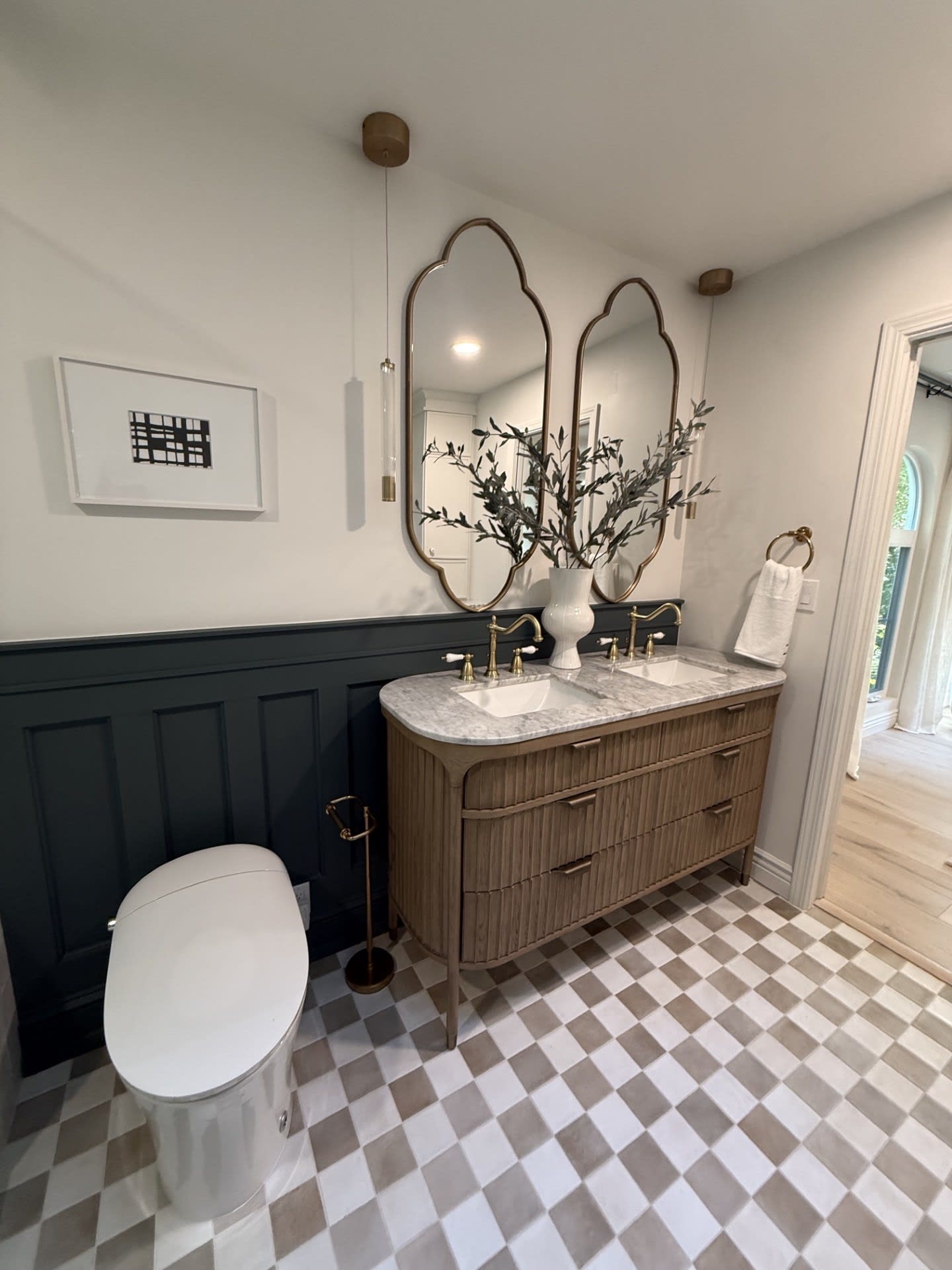
A bathroom update can make everyday routines easier while sharpening a Hillsborough home’s presentation for a future sale. The strongest projects focus on durable materials, thoughtful lighting, practical storage, and a cohesive design that supports the architecture of the home rather than chasing a short-lived trend. A clear plan also helps owners direct their budget toward details buyers can see and use.
Start With the Way the Room Works
Bathrooms earn their value through repetition: the morning rush, the late-night wind-down, the extra towels, the steam, and the daily need for surfaces that clean easily. Before selecting tile or fixtures, take an honest look at how the room performs. Is there enough counter space? Does the vanity offer useful storage? Are outlets placed where they are needed? Does the lighting make grooming tasks comfortable without washing out the room?
In many Hillsborough properties, bathrooms may range from compact original layouts to large suites that have been altered over several decades. The most effective update does not have to mean moving every wall. A deeper vanity, a better-organized linen cabinet, a recessed medicine cabinet, or a revised shower opening can materially improve daily use without turning the project into a full structural renovation.
Prioritize circulation before decoration. Doors should open without interfering with drawers, shower entries should feel comfortable, and frequently used items should have an accessible home. In a shared bathroom, double sinks may be helpful only if there is enough surrounding counter space and storage to make both stations functional. In a smaller room, one generous vanity with drawers can be more useful than squeezing in a second basin.
Ventilation belongs on the practical shortlist as well. A properly sized, quiet exhaust fan helps manage moisture and protects paint, grout, cabinetry, and mirrors over time. Pairing it with a humidity sensor or timer can reduce the chance that the fan is forgotten after use. These are not always the details that lead a design conversation, but they signal care and reduce maintenance concerns.
A bathroom feels more valuable when the layout removes small daily frustrations: clear counter space, concealed storage, task lighting, and dependable ventilation often matter more than an oversized fixture package.
Choose Materials That Look Considered and Wear Well
Material selection is where a bathroom begins to communicate its level of finish. For resale-minded updates, aim for finishes with visual longevity rather than highly specific colors, novelty patterns, or difficult-to-replace specialty products. Natural stone can be beautiful, but porcelain and ceramic tile can provide a similarly elevated look with straightforward care and broad style flexibility. The right choice depends on the room’s use, available maintenance time, and the surrounding finishes in the home.
Large-format porcelain on walls or floors can create a calm, continuous surface with fewer grout lines. Smaller tile can add texture and traction in a shower floor, especially when used in a restrained palette. If a bold tile is appealing, consider placing it in a niche, behind a vanity, or on a single accent wall rather than committing it to every surface. That approach gives the room personality while leaving the overall design adaptable.
Vanities deserve careful attention because they combine storage, plumbing, finish quality, and visual scale. Painted cabinetry in softened whites, muted earth tones, or deep neutrals can work well when coordinated with the rest of the home. Wood tones can add welcome warmth, particularly in bathrooms with stone or porcelain finishes. Choose cabinet construction that can tolerate humidity, and favor drawers or organizers that make use of the full cabinet depth.
For countertops, a durable quartz or natural stone surface with a simple eased edge is often a practical choice. Avoid overly busy patterns that compete with tile, hardware, and lighting. A quieter counter lets other design decisions read clearly and tends to photograph well when the home is eventually prepared for the market.
Lighting, Mirrors, and Fixtures Create the Finished Feeling
Even a carefully renovated bathroom can feel incomplete under a single overhead light. Layered lighting is one of the most useful upgrades for both function and presentation. A ceiling fixture provides general illumination, while sconces or vertically oriented fixtures placed near the mirror reduce harsh shadows. Dimmable lighting adds flexibility and helps the room feel more comfortable at different times of day.
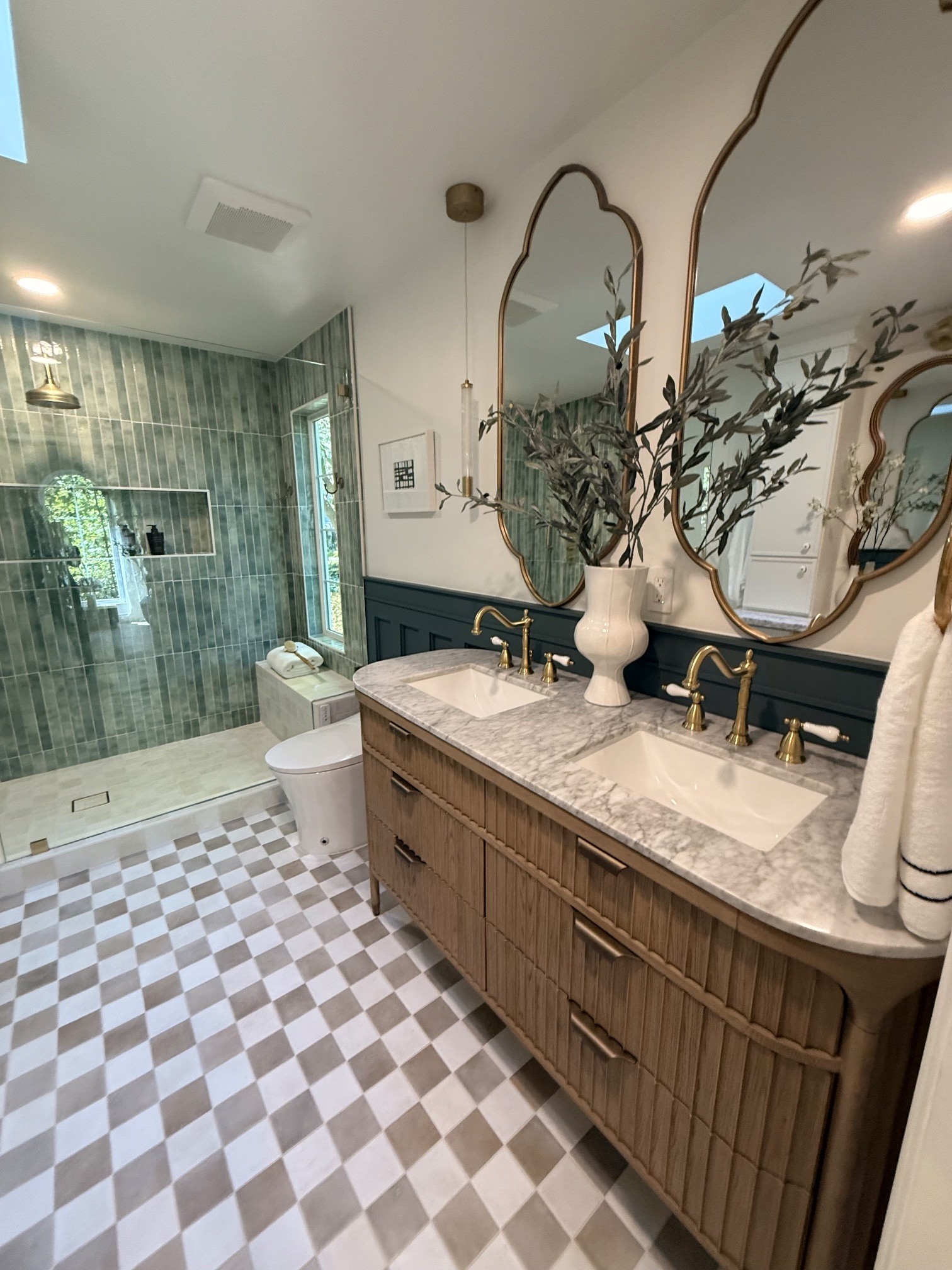
Mirrors should be sized for the vanity and wall rather than selected as an afterthought. A mirror that is too small can make an otherwise generous vanity feel undersized; one that overwhelms the wall can make the room feel crowded. Framed mirrors add architectural definition, while a clean-edged mirror can support a more contemporary design. Either can work when its proportions relate to the faucet, sconces, and cabinet width.
Fixture finishes are another opportunity for cohesion. Brushed nickel, polished chrome, matte black, and warm brass can all work, but a disciplined approach is more important than following a single trend. Match or intentionally coordinate the faucet, shower trim, cabinet hardware, towel bars, and lighting. Consistency makes an update feel planned, while a patchwork of finishes may make a new room appear pieced together.
Water efficiency and comfort can coexist. Modern shower valves, efficient toilets, and well-designed showerheads can improve performance while helping manage water use. When replacing plumbing fixtures, confirm that pressure, drainage, waterproofing, and access panels are addressed behind the walls. Buyers may not see these systems during a showing, but sound work supports confidence during inspections and helps protect the investment after completion.
A layered lighting plan is one of the most visible upgrades per dollar: overhead light, mirror-side task light, and a dimmer create a room that works better and presents more intentionally.
Match the Scope to the Home and the Market
Not every bathroom needs the same level of investment. A powder room may benefit most from memorable wallpaper, a new vanity, and polished lighting. A primary bath may justify a more extensive plan that includes a larger shower, upgraded storage, radiant heat, or a freestanding tub if the room has the scale to support it. Secondary bathrooms often benefit from durable surfaces and simple layouts that are easy to maintain.
In Hillsborough, it is especially important to consider the home as a whole. A highly ornate bathroom may feel disconnected inside a restrained mid-century residence, while an ultra-minimal room may not complement a more traditional property with detailed millwork. The goal is not to make every space identical; it is to create a visual thread that makes the house feel coherent from room to room.
Budget should also include the less glamorous line items: permits when required, demolition, waterproofing, plumbing adjustments, electrical work, ventilation, tile setting, delivery time, and a contingency for conditions discovered after walls are opened. Obtain detailed proposals, verify lead times before demolition begins, and select key materials early. A delayed vanity or discontinued tile can extend a project far beyond its expected timeline.
Prepare for a Future Sale Without Losing Everyday Comfort
A bathroom renovation should first make the home more enjoyable to own. Resale value follows when an update feels durable, cleanly executed, and appropriate to the property. Keep records for permits, warranties, product specifications, and contractor invoices; organized documentation can be helpful when future buyers ask about the work completed.
Before listing, small finishing touches can reinforce the value of a completed bathroom: fresh caulk, spotless grout, functioning drawers, balanced light bulbs, simple towels, and uncluttered counters. These details help a room read as maintained rather than merely renovated. Whether the next move is soon or years away, a bathroom designed around daily use and lasting materials can remain one of the home’s most rewarding improvements.